
50 years of the Viking Way (1976 – 2026).
The Viking Way is a 149-mile long-distance walking trail in eastern England that runs from the banks of the River Humber in Lincolnshire, down to Oakham in Rutland. It starts near the Humber Bridge, crosses the Lincolnshire Wolds, passes through the city of Lincoln, and finishes near Rutland Water.
This long-distance walking route is so named as it traverses the area occupied by Norse invaders in the 9th century – naming the region Danelaw. Many remains from this period have been found in the area that the Viking Way passes through, and villages and towns today still bear its influence in their names ending with 'by', meaning village, and 'thorp', meaning hamlet.
From the River Humber banks, the route crosses the Lincolnshire Wolds - past Caistor and Horncastle - and into the Witham Valley, crossing flat fenland to Lincoln. The route follows a path into the Lincoln Cathedral grounds from the north, down Steep Hill and High Street, and out the city past South Common. From Lincoln, the route enters North Kesteven and takes field paths and lanes past Greetham, Exton and Rutland Water. The trail ends at Oakham where it links with the Macmillan Way and the Hereward Way.
Saturday, 5th September 2026 marked the 50th anniversary of this route, which in recent months has seen upgrades to the surface, including new signage, stiles and footbridges. This date was celebrated at Woodhall Spa, when many of those involved with its improvements, publicity and maintenance gathered at the Golf Hotel in Woodhall Spa.
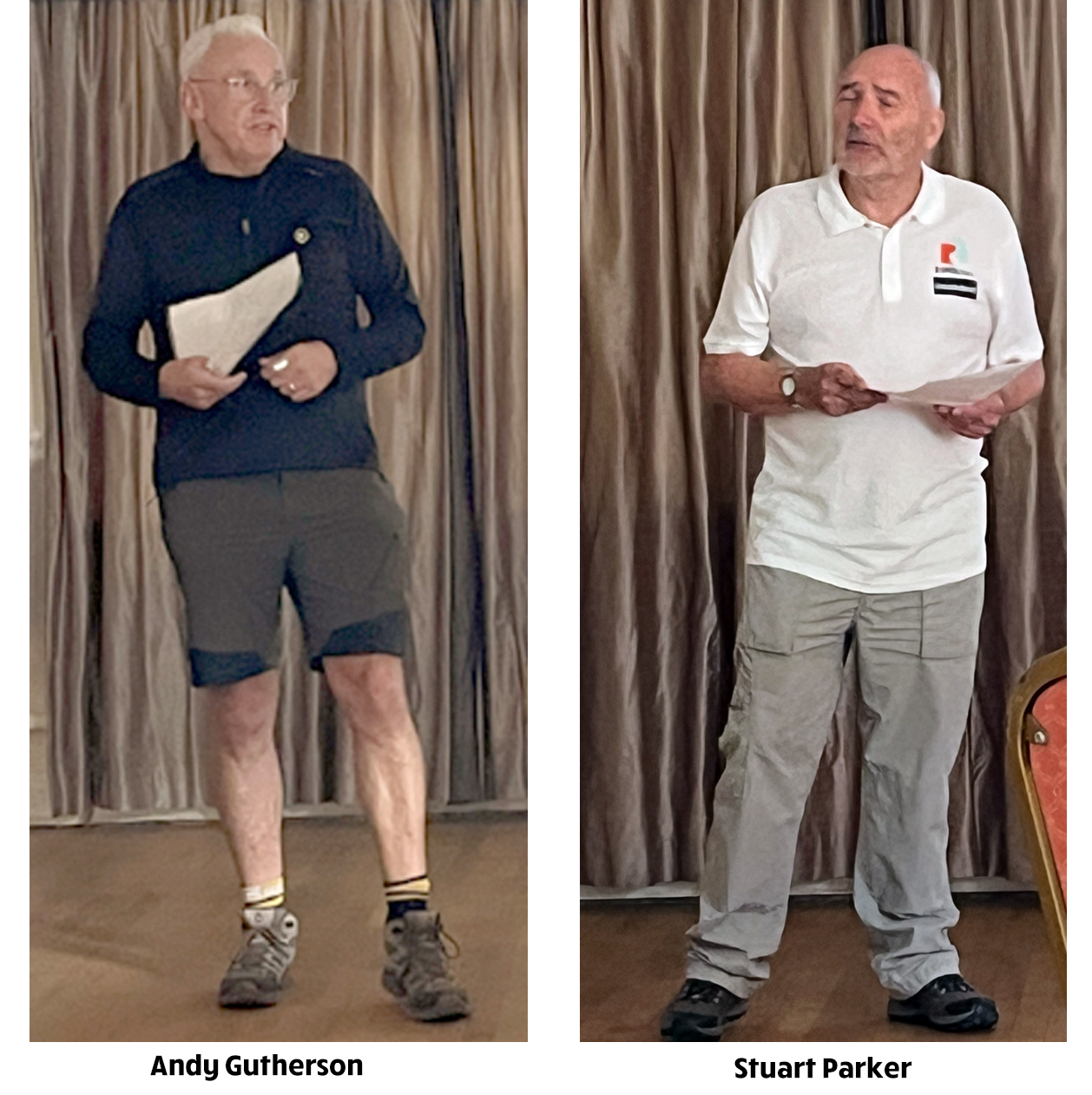
Debby Braund (Countryside Access & Community Project Officer, Lincolnshire County Council) welcomed the invitees, before Andy Gutherson, Executive Director for Place, one of eight senior officers on the LCC leadership team, spoke of the importance, not only of the Viking Way, but the whole Rights of Way network in Lincolnshire, maintained by a very small workforce.
He said the Trails bringing visitors into the county, drawing them to scenic areas like the Lincolnshire Wolds, and supporting local hospitality and rural businesses. He said many paths are ancient tracks and historic routes that reflect the county's past development and tie communities to their landscape. And, of course, he commented, footpaths, bridleways, and byways give people free, easy access to green spaces for walking, running, cycling, and horse riding.
Stuart Parker, Secretary of Lincolnshire Area Ramblers, then spoke of the origins of the Viking Way – those who devised it, walked it and gave it its name. Listen to his speech here:
The sound recording is poor, but the transcript is below:
“It is only fitting on this 50th anniversary occasion that we pay a tribute to those rambling pioneers who created the route:
Nev Cole, of the Grimsby-based Wanderlust Rambling Club;
Tom Dagwell, of the Sleaford & District Ramblers;
Brett Collier, of the Lincoln Ramblers;
All were working men, so had to plan and walk the route on Saturdays.
Also, critical to all this was the support of Cllr John Hedley-Lewis, who was chairman of the newly-created Lincolnshire County Council, formed by the coming together of the former county councils of Kesteven, Lindsey and Holland in 1974.
Also, Chris Hall, a former editor of The Countryman magazine, now a vice-president of the Ramblers’ Association, who came up with the name ‘Viking Way’ for the new path. In fact, Chris thought it should run from the Scottish border, down the Viking east coast to London!
On the opening day, 5th September 1976, Brett Collier led a walk along public footpaths from Belchford to Fulletby and he said: ‘A local farmer, from Fulletby Top, drove alongside us cursing and telling us in a loud voice that there was a perfectly good road to walk down to West Ashby!
John Hedley-Lewis had a serious cancer diagnosis and there was some pressure to get the Viking Way into being while he was still alive and any problem parts, and there were many, could be sorted out later. Brett said it took another 20 years to unscramble some sections.
Cllr Hedley-Lewis was too ill to attend the opening ceremony and he sadly passed away 3 months later in December 1976.
It is a great tribute to the work of those pioneers, together with the support of the Humberside, Lincolnshire, Leicestershire & Rutland councils, that the route was opened.
Today, after a few route iterations, we enjoy a much-improved long distance path, and it stands as an attraction for walkers to visit Lincolnshire to see it not all flat, as is the common misapprehension, but an area of contrasts, taking in the River Humber bank, the Lincolnshire Wolds National Landscape, the city of Lincoln, Lincoln Cliff Edge, Kesteven Uplands, on towards Rutland Water and to Oakham. It features frequently in our own local group walks either as linear sections or as part of circular walks and as public transport walks, as well as being an aim to many who wish to partake in challenge walks.
We thank the Lincolnshire County Council and officers for their continued maintenance of the path and all their promotional work this year to mark this 50th anniversary.”
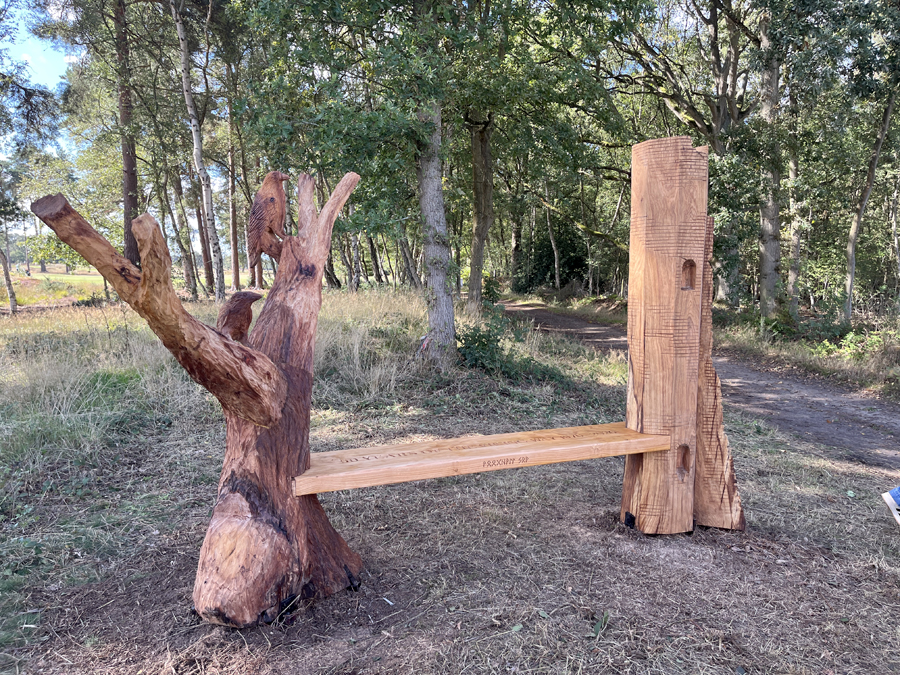
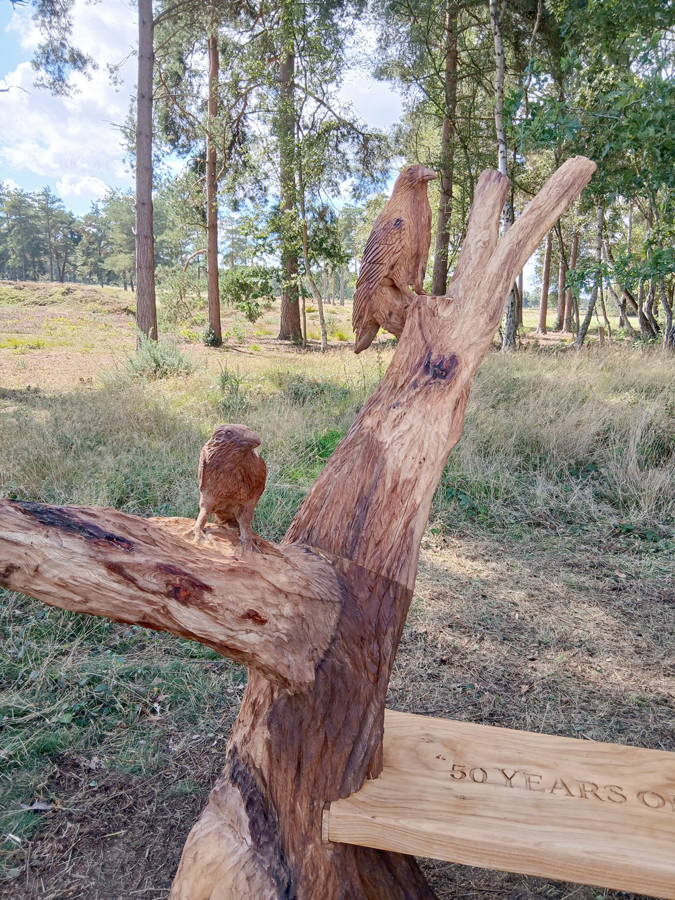
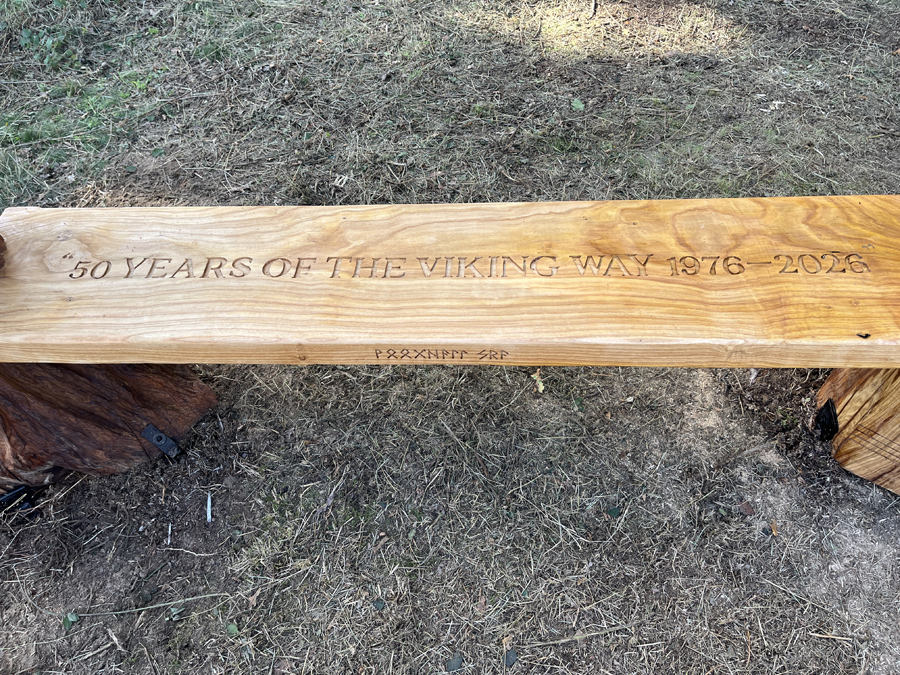
This bench, one of five placed along the Viking Way, reflects the local area and the Viking heritage. The seat is made from a plank of chestnut. The inscription reads ’50 years of the Viking Way 1976-2026’. On the edge are the words ‘Woodhall Spa’ written in Norse runes.
The tower on the right, carved from English oak, represents Woodhall’s ‘Tower on the Moor’ (often called Tor-O-Moor) the remains of a 15th century hunting lodge, built for Ralph Lord Cromwell, which can be seen from this location. On the left, the sculpture, carved from elm, represents Norse mythology. Yggdrasil is the ‘World Tree’ the immense and sacred ash tree at the centre of the cosmos. Perched on it are two ravens – Huggin (meaning thought) and Munnin (meaning memory). Every day, Odin, a widely revered god in Norse mythology and Germanic paganism, sent out the ravens to fly across the entire world, to see, hear, and gather news. By breakfast, they returned and whispered everything they have learned into Odin's ears, thus giving him supreme wisdom and foresight.
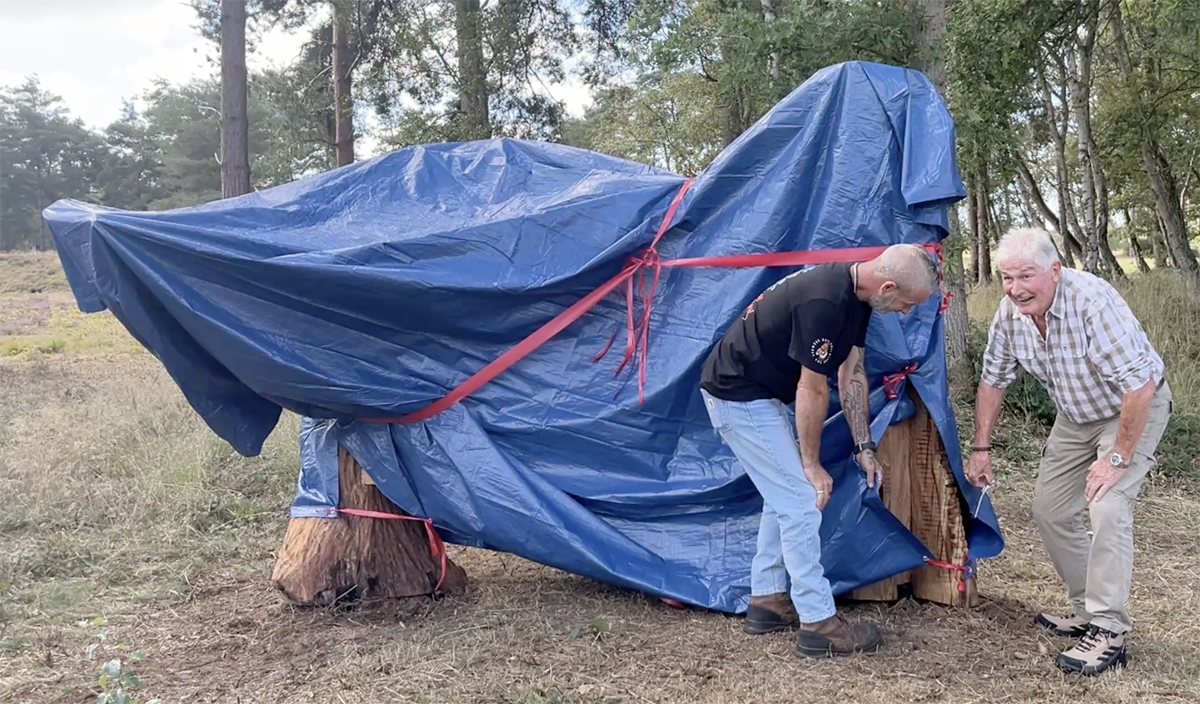
The structure was made by Louth-based woodcarver Simon Bogg and was unveiled by Councillor Nick Hastings (Reform, Louth North).
Dr Jo Porter, part of the Museums Team at LCC explains the Norse mythology